
 Pema Chodrun speaks and teaches extensively on Buddhism and becoming more conscious in our lives. She teaches that in order to live fully we should try to “experience each moment as completely new and fresh.” This teaching resonates with me. I see this idea, however, as more easily accomplished in my art practice than in my regular busy life. There is more focus, more consciousness when I set the time aside to make my Art. Certainly more than driving around in traffic, doing errands, all the while talking on my iPhone. Compared to that, my art practice seems almost monastic. But surely that is a good thing. I know from experience that over time, my Art Practice positively changes my Life.
I also know that I simply cannot generate any worthwhile Art unless I am fully present. I cannot multi task and make art at the same time. I can’t even listen to the radio.
Once in the studio and beginning to paint, my goal is to transition as quickly as possible to this state of experiencing each moment of creativity as “completely new and fresh.”
This can be difficult. However, I have developed several ways that help me become present and engaged when making my art. Maybe these can help you too….
[Tweet “”Your Art Practice is where you practice being alive.” – Nicholas Wilton”]
Wait as long as possible to decide which end is up.
Simply flip your Art as you work on it. Turn it sideways, upside down and just keep working. I find this so fun and it stops me from seeing it too long in the same way. You simply cannot become attached if the work is changing so dramatically. The longer I wait before deciding what is the final orientation the more substantial the final work often will be.
Make Marks in response to how you are feeling, not what you are seeing.
I know this sounds crazy but if we base some of our decisions upon how we are actually feeling instead of what we are seeing, especially in the beginning, the work will change and evolve quite differently and more unexpectedly. Surprise, chance and spontaneity awaken us. Habitual thinking and excessively figuring out what we should do next leads to self consciousness which eventually leads to boredom – not just for you, but the viewer as well. Try to stay really engaged with how the area you are working on is making you feel, not necessarily how it looks.
Judge your work by how you feel making it.
Judge the work in the beginning by how you are feeling. Are you engaged, are you awake? Is this joyful, engaging? Have you lost track of time? Do you ever dance while you are working? In short, your art practice is where you literally practice being alive. I find it a good rehearsal for how I want to try and be in the rest of my life. The soul knows when you are feeling alive and will let you know by delivering you powerful, authentic artwork.
I believe one of the primary reasons we make Art is how it makes us feel when we are in the process of actually making it. The gift for the artist, in the end, isn’t the finished artwork.
Maybe the gift is given while we are making the art, when for just a moment or two we feel a little more awake, a little more alive than we ever have before.
So, how do you feel when you make your Art?
In gratitude, Nicholas
26 Comments
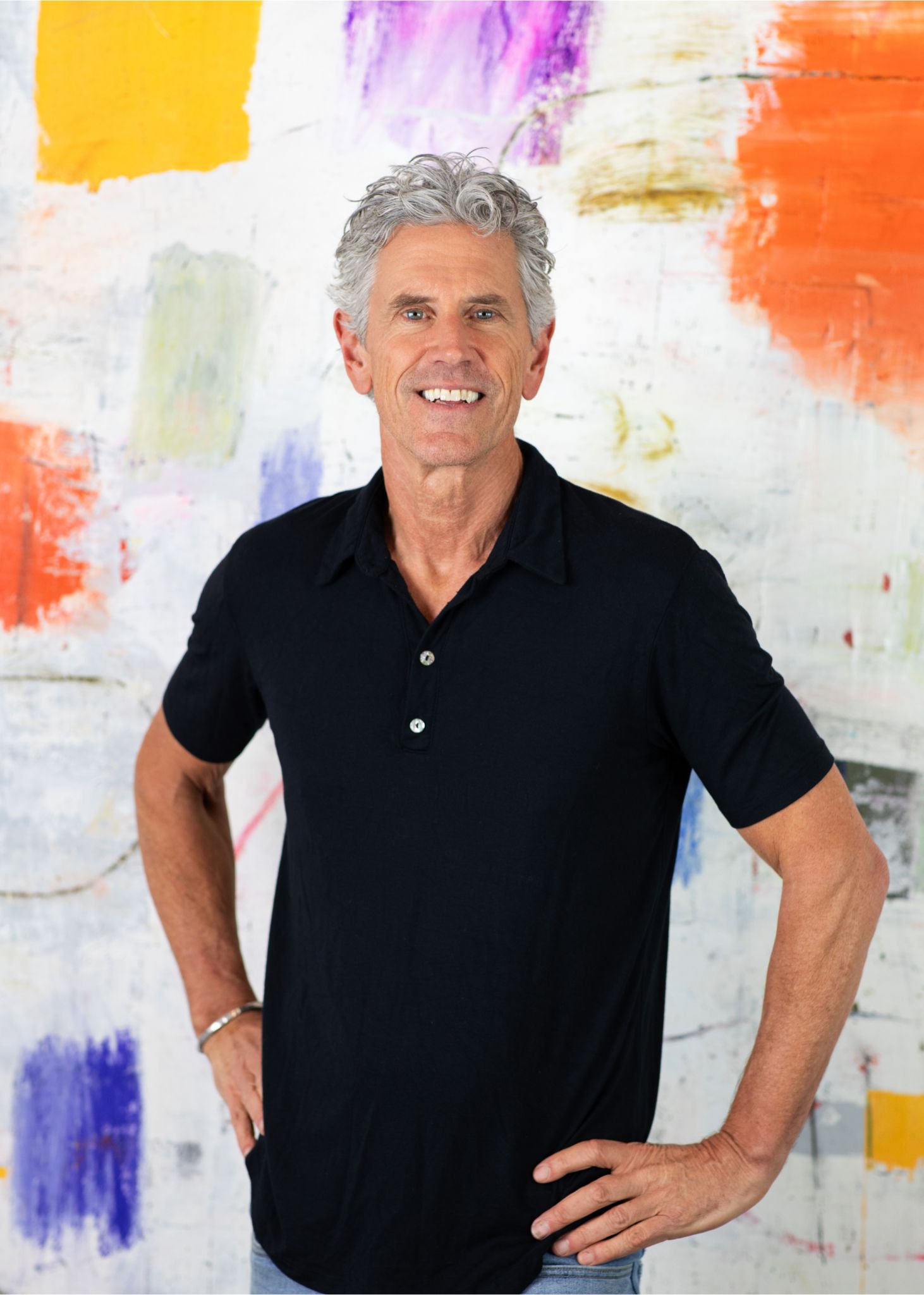
Hi! I’m
Nicholas Wilton
the founder of Art2Life.
With over 20 years experience as a working artist and educator, I’ve developed a systematic approach that brings authenticity, spontaneity and joy back into the creative process.
Join me and artists from all over the world on our Art2Life Instagram account or learn more here about Art2Life.
Very interesting, Nicholas. The idea of responding to what I feel rather than what I see is what sticks me as being most difficult. I “look for” the images on my canvas after I’ve made chaos on it. I think that is why it has been so difficult for me to do a non-objective abstract. I am sure I am guided by what I feel – that is – I do listen to my intuition but I’m also aware that my monkey mind is always lurking in the background and doing what it can to subvert intuition. There are times when that all shuts off and I get that very exciting feeling of loving what the paint is doing on the paper – but I don’t get into “flow” as much as I would like. I am wondering what it means to base a decision on what I am actually feeling rather than what I am seeing. Is this the same thing as listening to your intuition?
As always, you ask the absolute best questions and somehow manage to seem to be speaking directly to me in your writing. Thank you for your stellar thought-provoking posts.
Another great question–Isn’t all this stuff so interesting?! UYou know I remember I felt the same way you do now…Now believe it or not I do not see shapes as realistic or abstract–I only judge them on their relationship to the whole–how they fit in with whats around them. Yes go by your feeling–be bold so you are painting without too much regard for how it is going to turn out–that way it will feel less controlled…it is like telling someone to plan out their steps when they dance while they are dancing–you can’t do both..do the mark in a dance head space–then walk back and look at it and judge it -then go back in –back and forth, back and forth….
I get the dancing metaphor – and it also works with acting – you can’t be connected to the text if you are anticipating the next line – that is you can’t be present and in the moment if you are anticipating the next moment.
Very interesting, Nicholas. The idea of responding to what I feel rather than what I see is what sticks me as being most difficult. I “look for” the images on my canvas after I’ve made chaos on it. I think that is why it has been so difficult for me to do a non-objective abstract. I am sure I am guided by what I feel – that is – I do listen to my intuition but I’m also aware that my monkey mind is always lurking in the background and doing what it can to subvert intuition. There are times when that all shuts off and I get that very exciting feeling of loving what the paint is doing on the paper – but I don’t get into “flow” as much as I would like. I am wondering what it means to base a decision on what I am actually feeling rather than what I am seeing. Is this the same thing as listening to your intuition?
As always, you ask the absolute best questions and somehow manage to seem to be speaking directly to me in your writing. Thank you for your stellar thought-provoking posts.
Another great question–Isn’t all this stuff so interesting?! UYou know I remember I felt the same way you do now…Now believe it or not I do not see shapes as realistic or abstract–I only judge them on their relationship to the whole–how they fit in with whats around them. Yes go by your feeling–be bold so you are painting without too much regard for how it is going to turn out–that way it will feel less controlled…it is like telling someone to plan out their steps when they dance while they are dancing–you can’t do both..do the mark in a dance head space–then walk back and look at it and judge it -then go back in –back and forth, back and forth….
I get the dancing metaphor – and it also works with acting – you can’t be connected to the text if you are anticipating the next line – that is you can’t be present and in the moment if you are anticipating the next moment.
All of this post resonates with me.
I like the idea of flipping the work, and do it regularly when working with abstract work. Because in some of my more whimsical things I still use motifs such as houses and bottles, it is harder. Though one of my favourite painters, Jeroen Krabbé (yes the Dutch actor) is always turning his landscapes upside down while working on them. They end up playful and rich, as well as decorative.
I love walking into my studio. It is a kind of sacred space. Though it is also my office, just the sight of the materials makes me happy. And that moment of taking up those creamy intense oil paints on a brush and starting in (not knowing where it will take me) are one of life’s highs.
Love how you use the word gift when speaking about art. I’m writing a book on alternative art directions, and a large part of it is based on Lewis Hyde’s words,
‘A work of art is a gift, not a commodity. Every modern artist who
has chosen to labour with a gift must sooner or later wonder how he or she is
to survive in a society dominated by market exchange.’ – Lewis Hyde, The Gift
Seems a central dilemma. How do you work with pull between selling and ignoring the market entirely?
Sarah
Good question–actually really good–I will probably blog about this! I believe that fundamentally strong personal art sells because people have a need to feel Live and unique different art makes them feel this way…sales are a natural part of doing strong work…I like sales as it provides space for me to do more work. I see the market more in reaction to my work–I don’t game it by doing work the market wants…I trust that good work will sell…
All of this post resonates with me.
I like the idea of flipping the work, and do it regularly when working with abstract work. Because in some of my more whimsical things I still use motifs such as houses and bottles, it is harder. Though one of my favourite painters, Jeroen Krabbé (yes the Dutch actor) is always turning his landscapes upside down while working on them. They end up playful and rich, as well as decorative.
I love walking into my studio. It is a kind of sacred space. Though it is also my office, just the sight of the materials makes me happy. And that moment of taking up those creamy intense oil paints on a brush and starting in (not knowing where it will take me) are one of life’s highs.
Love how you use the word gift when speaking about art. I’m writing a book on alternative art directions, and a large part of it is based on Lewis Hyde’s words,
‘A work of art is a gift, not a commodity. Every modern artist who
has chosen to labour with a gift must sooner or later wonder how he or she is
to survive in a society dominated by market exchange.’ – Lewis Hyde, The Gift
Seems a central dilemma. How do you work with pull between selling and ignoring the market entirely?
Sarah
Good question–actually really good–I will probably blog about this! I believe that fundamentally strong personal art sells because people have a need to feel Live and unique different art makes them feel this way…sales are a natural part of doing strong work…I like sales as it provides space for me to do more work. I see the market more in reaction to my work–I don’t game it by doing work the market wants…I trust that good work will sell…
Love this…such good words. For me, painting makes me feel incredibly powerful. It’s a mix of feelings…so in control, but at the same time not. It helps me think and digest my life happenings. It’s therapy…truly. As I’ve been transitioning from art as a hobby to a profession, I feel an incredible pull between completing letting go and trying too hard. I’m able to start this endeavor from scratch and define my style, which is both liberating and scary too. Trying not to push to hard to make it happen is really tough. But I’m taking it one day at a time and enjoying the process…which is what (I think) art making (and living) is all about. Thanks for your insight and encouragement Nicholas!
Isn’t funny that letting go can be so hard sometimes? LIke if we do too much someone is going to rush in teh room and give us a citation…ha—I always try to remember what is the worst that could happen?
Yes! It is so hard! I think letting go is hard because it is at the heart of taking the risk of being completely honest and vulnerable in one’s art making – no matter what the art form.
Love this…such good words. For me, painting makes me feel incredibly powerful. It’s a mix of feelings…so in control, but at the same time not. It helps me think and digest my life happenings. It’s therapy…truly. As I’ve been transitioning from art as a hobby to a profession, I feel an incredible pull between completing letting go and trying too hard. I’m able to start this endeavor from scratch and define my style, which is both liberating and scary too. Trying not to push to hard to make it happen is really tough. But I’m taking it one day at a time and enjoying the process…which is what (I think) art making (and living) is all about. Thanks for your insight and encouragement Nicholas!
Isn’t funny that letting go can be so hard sometimes? LIke if we do too much someone is going to rush in teh room and give us a citation…ha—I always try to remember what is the worst that could happen?
Yes! It is so hard! I think letting go is hard because it is at the heart of taking the risk of being completely honest and vulnerable in one’s art making – no matter what the art form.
It makes sense if you are working on abstract forms. Right now, I’m sewing the rest of a fabric collage……..and the image is of The Road. It leads out of the picture frame…….but it isn’t an abstract…..it’s a direction to the village North and South…….and very difficult road that has been worn & travel on a bit too much.
Let you know when I’m back in the abstract………
til then,
Lesley
That is true–sometimes when I used to make more realistic pictures I would still first come up with a strong composition this way–then turn it into a picture!
It makes sense if you are working on abstract forms. Right now, I’m sewing the rest of a fabric collage……..and the image is of The Road. It leads out of the picture frame…….but it isn’t an abstract…..it’s a direction to the village North and South…….and very difficult road that has been worn & travel on a bit too much.
Let you know when I’m back in the abstract………
til then,
Lesley
That is true–sometimes when I used to make more realistic pictures I would still first come up with a strong composition this way–then turn it into a picture!
great discussion as always… for myself, I don’t feel that I can separate what I am seeing from what I am feeling and sensing – its all one experience. I am self taught, so perhaps if one is educated about design and composition, seeing involves some kind of judgement. Since my pieces are completely abstract, i work largely in the way you describe: turning the piece constantly, working intuitively, and focusing on the process – if its not fun, I don’t see any point to doing it. I love your words, ‘your art practice is where you literally practice being alive’ – I feel its so important to keep remembering that art (as everything) is a practice.
Yes you are fortunate you don’t have to unlearn! 6 yr olds usually have flawless compositions!
great discussion as always… for myself, I don’t feel that I can separate what I am seeing from what I am feeling and sensing – its all one experience. I am self taught, so perhaps if one is educated about design and composition, seeing involves some kind of judgement. Since my pieces are completely abstract, i work largely in the way you describe: turning the piece constantly, working intuitively, and focusing on the process – if its not fun, I don’t see any point to doing it. I love your words, ‘your art practice is where you literally practice being alive’ – I feel its so important to keep remembering that art (as everything) is a practice.
Yes you are fortunate you don’t have to unlearn! 6 yr olds usually have flawless compositions!
I agree Nicholas very much with this thing about ‘feeling’ the marks. I really like this description of yours. It’s a suprise when I actually really look at what I’ve done later on. When the ‘feeling’ painting is happening, I get butterflies in my stomach. This tells me I’m ‘in the zone’. And that’s what I’m wanting each time. It’s a drug, really.
I agree Nicholas very much with this thing about ‘feeling’ the marks. I really like this description of yours. It’s a suprise when I actually really look at what I’ve done later on. When the ‘feeling’ painting is happening, I get butterflies in my stomach. This tells me I’m ‘in the zone’. And that’s what I’m wanting each time. It’s a drug, really.