
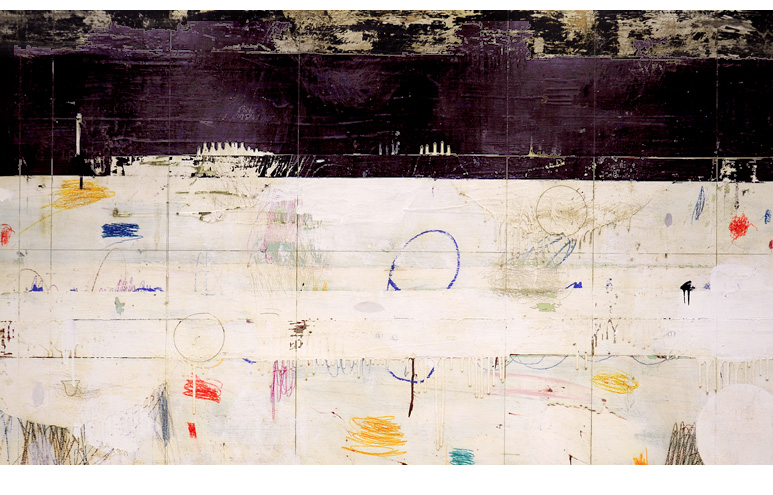
 The wonderful thing about fine art is that you get to make what you want. Making Art at its best is unbridled personal expression, free of concerns for making it a certain way or pleasing anyone beside yourself. There are very few things one can do in life that carry such freedom.
It is no surprise then, that when Art is made for someone other than yourself it becomes trickier. It could be a friend, an institution or a collector. Anyone peering over the shoulder of the artist, who has a vested interest in the outcome, can often make the creative process more challenging. It no longer becomes just about pleasing yourself, but becomes about pleasing others as well. If it seems hard sometimes to please yourself, then it becomes doubly so when others are on the sidelines waiting.
You might have guessed by now that I am mostly talking about commissions. Those projects that are often instigated by someone who has seen something you have made before, that they love. And of course it is no longer available, which makes it that much more desired. The only solution is for them to commission you to recreate it again – not as an exact copy, but something usually close.
[Tweet “”Make it yours. Always.” – NW”]
The artist must now create in a different way. This new way of creating, this thinking is no longer solely the artist’s. It is easily affected by the wishes and concerns of the waiting patron. It can be very difficult to not think about the comments and concerns of the interested party who has possibly put thousands of dollars on your studio table. We all want to please. I know I do. Unfortunately this can stifle the creative process.
It seems so easy to point at something done previously, probably something done effortlessly and without particular thought, and think it can be remade again. This hasn’t been my experience. The second time around almost always becomes tiring or even worse, incredibly rigid and stiff.
Usually it is both, but since it assured a sale where there wasn’t one, I usually agree. It always seemed so possible, such a reasonable request. I am, after all, an artist. What is the big problem?
Over the years, however, I have become better at doing commissions. I actually enjoy them now. What really helped me was coming up with two rules, commitments to myself actually, that I now follow. If I do, then everything is much easier. Maybe they can help you too.
You have to be excited.
I never accept a commission unless I genuinely want to make this particular piece of art. I have to be somewhat engaged and in alignment with the premise. For example, if it is making something derived from very, old work I probably won’t accept the commission. I no longer make Art in the way I did 10 years ago. I don’t want to go backwards, so this is a definite no. It has to be current. In short, I have to be able to become excited about it. I know for certain if I am not excited, the art will fall flat.
Make it yours. Always.
The second commitment to myself is my personal guarantee. I tell myself that at any point and for any reason, if the client is not entirely happy, they are under no obligation to purchase. If they are not totally happy with the commission then I will keep it. This puts me squarely back in the driver’s seat of making the art according to just my sensibilities. It doesn’t matter at all if the client accepts it or not. I just have to like it so much, it must be so strong, that I would gladly send it to one of my galleries, or better yet, keep it myself. This painting, in other words, is made to please myself.
It becomes almost incidental that there might be a buyer waiting for it – or perhaps there is not. Strong work sells. If I love it, then someone else will too. And in the end the primary experience, the lion’s share of the value is not the price but the experience of creating something you actually really, really like. I get that regardless. It must be a win for me no matter the outcome.
Interestingly, if I truly love it, almost always the waiting buyer will too.
These two commitments seem obvious but it took me years to figure it out. Maybe you have a knack for doing commissions, a way that makes everyone happy. Especially you.
If you do I would love to hear about them.
In gratitude, Nicholas
9 Comments

Hi! I’m
Nicholas Wilton
the founder of Art2Life.
With over 20 years experience as a working artist and educator, I’ve developed a systematic approach that brings authenticity, spontaneity and joy back into the creative process.
Join me and artists from all over the world in our Free Art2Life Artists Facebook Group or learn more here about Art2Life.


Thank you again, Nicholas. This article was perfectly timed for me. Recently I did a piece of art for a very demanding individual whose detailed instructions were way too confining for me and did not make sense. I tried to accommodate as much as I could, but after several rounds it did not end well. I was asked to remove some of the most creative aspects at the client’s request, as well as positioning of elements that made no sense to me from the point of view of composition or perspective. I then learned that she wanted to take my piece and make her own edits. So we clashed and she ended up not using it for the intended purpose. This situation left me wondering how I could have handled this better from the beginning. Any thoughts out there?
Hi Carole
your description struck a cord in me due to very similar experiences I have made in my main field of work, which is interior design.
Whenever a client (2 x now) wants to micro-manage my work, the process becomes very painful and forced and the result very unsatisfactory for me.
Now I talk openly to my potential clients about the process and where they need to let go, so that the outcome is the very best for them. And I mention, that micro-managing on a daily basis is not at all a good way to work with any interior designer.
As example when starting a design-project we – the clients and I – develop a requirement list together based on questionnaires, images on HOUZZ and a personal interview. Then I develop a presentation with color and material samples plus space plan, 3 D sketches some images fro furnishings. Depending on size of project we have more presentation meetings, where new elements can be reviewed and revised.
In the case of a commissioned painting – it could be that you show sketches and color board. After the clients have signed off on it and paid you at least 75% of the price you paint the painting. Then you deliver and have the art piece hung.
Best wishes, Carole.
Thank you, Magdalena, that is very good advice!
Thank you again, Nicholas. This article was perfectly timed for me. Recently I did a piece of art for a very demanding individual whose detailed instructions were way too confining for me and did not make sense. I tried to accommodate as much as I could, but after several rounds it did not end well. I was asked to remove some of the most creative aspects at the client’s request, as well as positioning of elements that made no sense to me from the point of view of composition or perspective. I then learned that she wanted to take my piece and make her own edits. So we clashed and she ended up not using it for the intended purpose. This situation left me wondering how I could have handled this better from the beginning. Any thoughts out there?
Hi Carole
your description struck a cord in me due to very similar experiences I have made in my main field of work, which is interior design.
Whenever a client (2 x now) wants to micro-manage my work, the process becomes very painful and forced and the result very unsatisfactory for me.
Now I talk openly to my potential clients about the process and where they need to let go, so that the outcome is the very best for them. And I mention, that micro-managing on a daily basis is not at all a good way to work with any interior designer.
As example when starting a design-project we – the clients and I – develop a requirement list together based on questionnaires, images on HOUZZ and a personal interview. Then I develop a presentation with color and material samples plus space plan, 3 D sketches some images fro furnishings. Depending on size of project we have more presentation meetings, where new elements can be reviewed and revised.
In the case of a commissioned painting – it could be that you show sketches and color board. After the clients have signed off on it and paid you at least 75% of the price you paint the painting. Then you deliver and have the art piece hung.
Best wishes, Carole.
As always, did I enjoy reading your newsletter. Thank you for sharing the two rules/commitments to yourself.
That is great advice. I also love the painting you put on your newsletter. Your paintings always put a smile on my face. Is there a reason why you don’t publish title and size of your paintings?
As always, did I enjoy reading your newsletter. Thank you for sharing the two rules/commitments to yourself.
That is great advice. I also love the painting you put on your newsletter. Your paintings always put a smile on my face. Is there a reason why you don’t publish title and size of your paintings?
Nick, I have a practical question. Do you make them give you a deposit? If they don’t like the piece (I can’t imagine they wouldn’t), do you give the deposit back?
Nick, I have a practical question. Do you make them give you a deposit? If they don’t like the piece (I can’t imagine they wouldn’t), do you give the deposit back?