
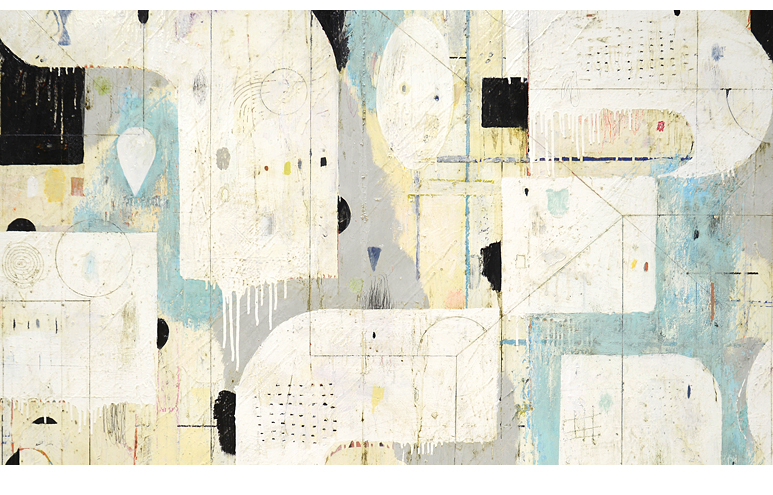
 I have noticed an interesting thing about how I learn and improve my art. I used to think the more time I spent painting – meaning the actual, physical time I spent working hard – was in direct proportion to how much my work improved.
Over the years, working hard is just something I felt was my only option if I wanted to make my art really great. The harder I worked, I thought, the faster and better my art would become…Now, years later, I think that maybe I had it all wrong.
I began to understand when I was listening to the poet and philosopher David Whyte speaking in San Francisco a couple of years ago. He said something I didn’t completely understand at the time, but which I wrote it later so that I could.
He said, “…Visitation, absence, visitation, absence, visitation, absence, (he this repeated over and over again) is how we learn.” In other words, the time between the periods of effort, the pauses are fundamentally as important as the periods of work. He believes that this “on, off and on again “ process produces more consistent, more substantial results. It is not how long we work but rather how often. I have now come to realize that this is also true for me.
I taught a 5-day workshop on Vancouver Island in British Columbia. This is an amazing opportunity for people to spend an unbroken period of time just focusing on their art. The improvement is extraordinary. However, I also have taught a 6 week, 3 hours per week evening course in my studio. What I have seen, amazingly, was that these students – even though they were only working 3 hours a week – also have had similar remarkable improvement even though they were working half as much time as those in the workshop.
I now understand that even though they were not physically painting as much, they were, nonetheless, still thinking about principles they had learned. Examples of color, value, and composition all begin to creep into their everyday life and as a result their visual sensitivity increases. Miraculously they just improved every time they came to class.
So maybe we don’t need to work harder forever and ever, but instead just sometimes put the brushes in the can of turpentine and go away for the afternoon. In the name of improving my work, I now should go bird watching more often. Or collect driftwood or even play some bocce ball. Just mix it up.
Visitation, absence, visitation, absence. This is truly how we learn. I think this way of working is going to work out much better not just for my art but for my life as well.
What do you do to stay inspired with your work?
In gratitude, Nicholas
18 Comments

Hi! I’m
Nicholas Wilton
the founder of Art2Life.
With over 20 years experience as a working artist and educator, I’ve developed a systematic approach that brings authenticity, spontaneity and joy back into the creative process.
Join me and artists from all over the world in our Free Art2Life Artists Facebook Group or learn more here about Art2Life.


That’s really interesting. I noticed that about my artwork, too — taking time off made a very positive difference. (Too much time off, however, means I’ve had to start over a few times.) Finding the right amount of time off has been helpful. Yard work, laundry, shopping are important too, and I’m so glad that I don’t have to feel guilty about that.
I have found this to be true.I have seasonal ways of working,like a four term year with a few weeks break in-between each one I never planned it that way it just seemed to evolve.
Yes, things progress in your head without conscious effort. The important thing is to step back long enough so you can approach painting again with a fresh eye.
I find your piece about absence and visitation very interesting and i do find that is how i work. I have felt guilty in the past not working, working working but during the times i am not working, my mind is still on it. I tend to have some quite long absences and come back with more vigour and on a different track usually working on a few pieces at a time. I go for a coffee with a friend, watch the birds and of course there is always the chores to do. I try to remember it is a good way to work and move forward
Validating and reassuring…since I cannot spend large and long amounts of time in my studio. I feel more relaxed about my practice having heard this…which I think you have mentioned before. My son was in a very intensive acting program in NYC awhile back. At the end of the year, the students were instructed to go home and ‘forget about acting’ for the summer… to allow integration time. Also, I let go of playing piano for a very long time and when I came back to it, amazingly, things came easier. Same with my art, I was away for a super long time and when I came back to it, my drawing skills had improved. Feels like a miracle.
Yes! I had a 20 year absence from painting — I was amazed how I knew all I knew. What a blessing really! Lucky us. 🌞
Love this! Just yesterday I walked into my studio to get something and saw in an instance what my paintings needed! I had been staring at them for days not knowing what it was. But after a few days off, boom! Clear as day.
I am becoming better with the fact that my painting cycles are cyclical (as opposed to Calvinistic/linear) so this helps a lot. Visitation, absence, visitation, absence. My new mantra maybe? 😎 just what I needed thanks!
I love this! I have given myself more guilt than you know for not working and then working. I have always heard that you must be in studio every day and work hard. Sometime life just gets in the way or I feel guilty about not doing things in my life —so will concentrate on lifting the guilt load and painting more.
O, Nicholas, yes!! Something mysterious happens when we…i. e. our minds are not focusing on the skill we are trying so hard to master, those as you say “absence” intervals. I learned this years ago when working with my dog on agility exercises. He seemed to learn overnight the move I was trying and becoming frustrated with just the day before. The next day he would do it right on the very first try of the day and his learning was even better when we worked every 2nd or 3rd day instead of every day. It is so much better to have a 3 to 4 hour class once a week over several weeks than cramming it into 2 or 3 all day long workshops. In those 3 and 4 all day sessions just about the time you get into your right brain altered state it is time to pack up and go home! it is like crashing after cramming for a final exam.
Reminds me of how we process things while dreaming. After a good nights sleep we suddenly remember that was nagging us in the back of our heads. I’ve been away from painting for years and in that time I now realize I’ve learned so much!
Fabulous! Now, instead of thinking I am procrastinating, I will practice better “self talk.”
Maybe something like: I am filling myself with inspiration and anticipation of what will happen next time I visit the studio. How’s that?!
Visitation , absence is something we could use as a CULTURE right now. The whole “Work Hard, Play Hard” thing is too much. In other words, I totally AGREE! It has plagued my self talk for years. Thank you Janet!
I have found this concept to be very true, in my life, and work. So, I stopped my negative self talk, when I go from painting, to piecing an art quilt, or to my knitting, felting, I have found the rhythmic method of knitting to be very calming to the brain, and them many more ideas flow so much more free, when I return to my piece for painting.
So very true. True creativity can not be forced. Without having a studio to work in, it can be a little difficult to be spontaneous. It takes strict scheduling and preparation. Reading about some of my favorite artists always keeps me motivated in an otherwise sheltered environment.
I use something similar.. Periodic meditations. By that i mean i stop studio time after 4 hours and meditate. I am normally graced with insights for improvements or next steps for the works in progress. Then i go back to work then i meditate.
Great sharing thanks. It is very helpful to understand what other artists do and how they work.
Barry
This rings so true to me. I can apply it both to painting and to playing the piano. When I was a kid and had gone days without practicing the piano, I was always surprised that I could play the music piece even better when coming back to it. And when thinking about it, I remember taking an oil painting course in college once a week and being able to enhance the painting the next week with no trouble……these days I do get more creative ideas when taking a break from art.
I am grateful for all your posts with wonderful help. Thank you!
Silvia Roberts
I find this a refreshing and comforting thought. I always beat myself up because I called that absent time, procrastination even though painting or creating something was going on in my head. Thank you for the clarification.