
 I kind of cringed when I wrote that subject line. I used to think like this. In the past, usually when my art was not going so well, I would look outside of myself for answers. Maybe I hadn’t sold anything or was just feeling kind of unconfident about what I was making. It just somehow seemed that everyone in the world was doing better than me. What ever it is, sometimes when things aren’t going so well here, we look over there, to see what others are making.
And then, if you see art that you love and it appears to be doing all the things that yours is not, such as selling or appearing any number of ways, all better than your own work, it does seem logical that you just might make your work more like that work. In fact, you just might try, when nobody is looking, to copy that work.
And that is a problem. Not so much because, as we all have found out, it is not so fun, but because it is not at all the right path to lead you back to where you belong. Where you should be starting. Where you should be paying attention: your Art.
Stay in your lane -- NW Share on XWe need to be inspired. It is essential to look at others work. Especially work that is going where you would like to go someday. But we need to do it with a particular set of questions and goals. Ones that help us get the benefits of looking at others work but also keep us in our own artistic lanes. Remember there is something in this art that is calling you to it. And that is what we are after.
Here are the questions I use when falling in love with someone else’s art.
What specifically are the qualities of the admired art that attract you?
Really go deep with this question. Write down the specific aspects you admire.
Compared to your art… Is it more colorful? More loose? Is it the subject matter or the feeling of the finished work that draws you to it?
Does my art have some of these qualities already?
It might be possible that all you need to do is strengthen these qualities in your own work to improve it. In other words you just need to push your art further.
What would I change about this admired work if I were making it?
In other words what don’t you like about it?
In asking and then answering all three of these questions, you are framing this attraction in terms of your own art.
Let others work help inform you about where you want to go. The whole creative world is self-referential. All of us are influencing one another. The successes of others should inspire you. After all, if it possible for them, it is possible for you too.
Take a dive into what others are making, but do it looking through the lens of your own art. You always need to be driving your own car. Not somebody else’s. There is no room in their car anyway for you. Drive yours. Stay in your lane. Sure, listen to the radio as you go, but don’t try to become it. Just listen and let it inspire you as you go. It is the soundtrack to your movie. Your art. Your life.
31 Comments
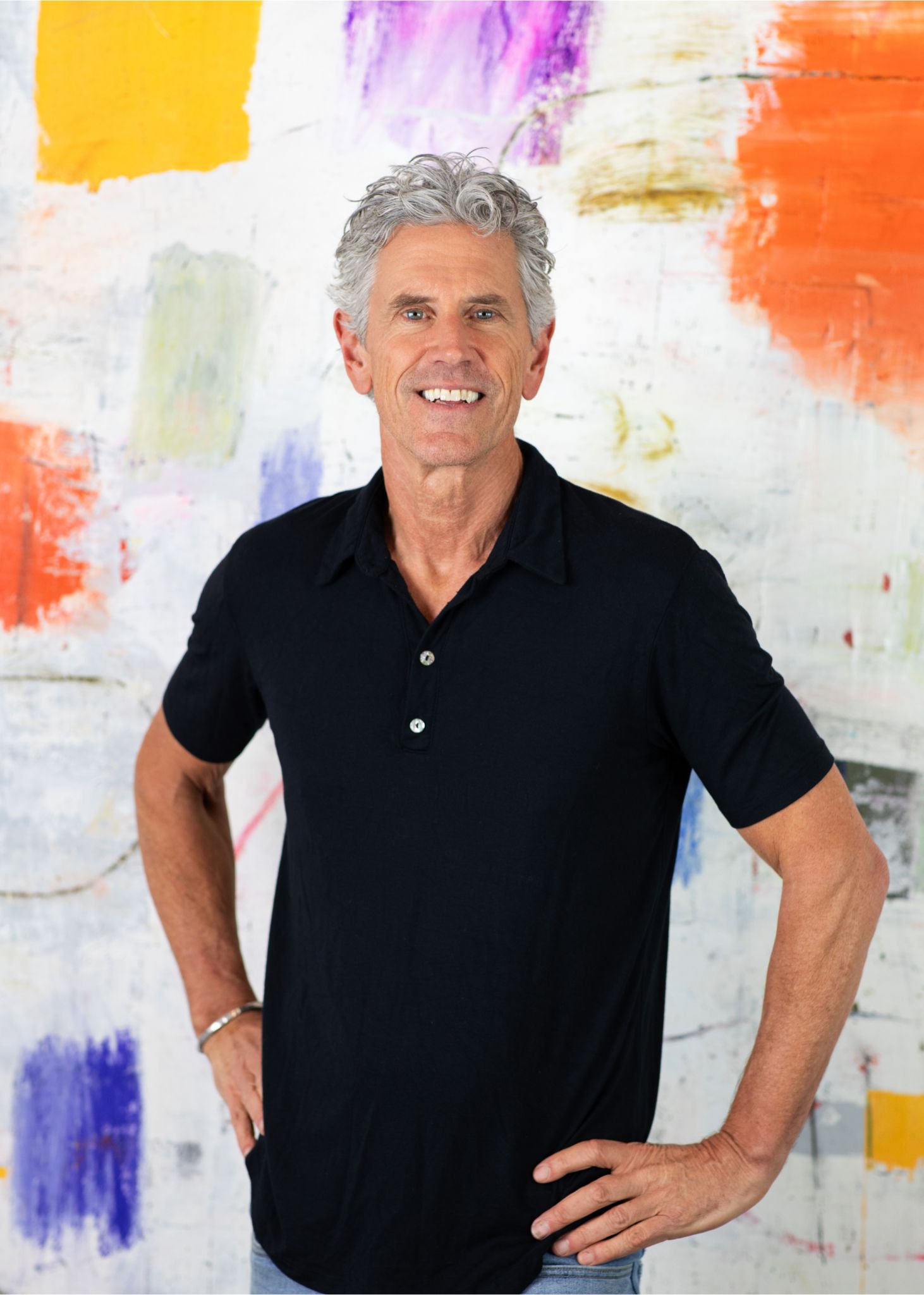
Hi! I’m
Nicholas Wilton
the founder of Art2Life.
With over 20 years experience as a working artist and educator, I’ve developed a systematic approach that brings authenticity, spontaneity and joy back into the creative process.
Join me and artists from all over the world on our Art2Life Instagram account or learn more here about Art2Life.

Nicholas,
I’ve never been so frustrated or unhappy as when I try to duplicate past work. Just as you said, you aren’t fully invested in a new way in what you are doing. I wonder though what your experience is with revisiting work;looking for the bits and pieces that excited you and that you want to build on. I’d guess that this is part of what is embedded in trying to replicate past work. Maybe we are trying to get to those interesting parts again and to see what happens?
Thank you-as always, a timely post!
Libby
yes, duplication and unhappiness goes together-well said.
Thank you Nicholas, again. Yes, when I find myself working “too hard” on something and it is getting worse, not better, I try to identify what the obstacle is that is closing off my way forward. Sometimes I just have to close my eyes and hear you say: Drive off the cliff. It helps me re-connect with the work. 🙂
When it happens to me — I call it painting with my head instead of my heart.
Nicely said! thanks
I experienced this recently when I was trying to paint a “set” of paintings. I was painting on two different canvases and wanted the paintings to be kind of a set, color co-ordinated but not exactly matching. I was surprised at how frustrating this was to me. I was not happy at all with the outcome of either painting. I was trying too hard. So, I ended up abandoning the “set” idea and just letting myself go. I ended up really liking both paintings but they were totally different, with each painting evoking a different feel and mood. I learned that I paint better by intuition and just letting myself go. Sometimes this resembles a dance with the canvas and sometimes it feels more like war. 🙂
Do you find that working in a style becomes predictable 3 or 4 pieces into it, and the deep exploration kind of Peters out? I seem to need to change something rather profound in order to make it fully exploratory (which are my best pieces). Is media, pallet and methodology enough to be a “style?”
I find this, too! And then I worry about whether I will ever have a consistent and recognizable “style”…
I think Style is created by our thinking –by your preferences that improve over time–it is not created by the materials…
I have the same predicament at the moment. I made a piece en plain air, quite small and in acrylic which is not my normal medium. I was very pleased with it, so pleased that I wanted to make a larger version, in oil. I’ve got as far as putting down the ground, but am apprehensive, probably because i know that this is really impossible. How can I possibly recreate the spontaneity of the first work, with its bold brush strokes in direct response to the landscape. I know really that I can look at the first painting,but must then it put it out of sight. (the worst scenario would be that I accidentally splash the first painting, or step on it!). I think you too know that you should hide your photo; one lingering look, then move on.
you got it…
I don’t try to replicate paintings but I tend to see each painting – especially with non objective abstracts – as just a step in a series that will evolve on its own. I see your second yellow painting as a next step – the next in a series of yellow paintings. I carry the thoughts, the intention, from one painting in the series to the next – but the paintings are always different – even when I think I am doing something very similar.
Yeah I see that –it is just that I am thinking about the wrong painting when working on this one…
I totally feel you on this…one of the biggest challenges of being in the mentorship. Producing work that I think shows I’m learning gets in the way of just letting it flow and I do my best work when I just say screw it and let it rip…but it’s so easy to get caught up in people pleasing. I can see this is not just an issue for emerging artists but rather an ongoing challenge. Thanks for sharing. I can see why you want to make another one like this…
Yeah, none of us are immune…I am a pleaser for sure–helps in teaching but hurts sometimes in painting…
Totally having this with a commission painting. It feels too structured, like I can’t let it evolve! As a result it’s totally not working so later today I’m going to begin again with a new attitude of painting it for me. 😉
AWESOME ALICE!
It’s a difficult and unexpected dynamic that a work so inspiring ends up limiting us. I was recently inspired by a Helen Frankenthaler painting. That moment of beholding the work and enjoying and admiring the interplay of colors is what I wanted to capture. Ha! It’s even there in my language: Capture, to make my prisoner. There were just so many reasons that this referencing bogged down my process. The canvas sizes were vastly different, she used thinned down oil paint, I used acrylic. At some point I had to stop looking at the Frankenthaler inspiration piece. I’m almost finished with the painting now, I don’t think anyone would make the connection of mine to the original, but the painting feels like it has it’s own voice. Thanks again, Nicholas, for pulling back the veil on your process–very inspiring!
Laura, I’ve experienced similar moments of an inspiring work limiting me. Recently I had an insight about why,at least for me, trying to incorporate another artist’s way of handling paint, color, form etc mostly dead ends. It is like learning a new language, you can quickly learn some phrases to get you by and sound like you know how to speak it. But when it comes to putting together your own sentences, you’re at a loss. Borrowing someone else’s visual vocabulary, without the structure, background, history – everything that makes a total work so awe inspiring is bound to fail. You end up with superficial mannerisms that have very little to do with your own work.
On the other hand, it sounds like you have managed to use the inspiration to go beyond copying and find your own voice.
I regularly copy paintings of artists I love, I learn a lot from it. Then 2-3 years later, I’ll see something in my own work surface which shows I’ve integrated whatever it was that inspired me.
cheers,
Sarah
Hi Sarah,
I agree that I have learned a lot from copying other artists as a manner of an exercise or a way to learn. The piece I need to remember to embrace is that this is an inspiration, a beginning place. Ultimately, I’m going to have to put that beginning piece of inspiration aside (because kind of like you mentioned with your language metaphor–it’s their voice) and jump into the painting on its own right.
I’ve had similar integration happen to me where somewhere down the road, years after I had originally copied an artist’s work, I realized that I used and integrated a technique in a natural and instinctual way where it seemed more like my translation of the technique.
It’s such a fun and interesting path–isn’t it?
Warmly,
Laura
Thanks for your warm reply Laura. Looks like we’re coming from the same place on this. And yes it is a great path, full of learning and unexpected twists. I like the addition of the voice metaphor, and of course the use of ‘translation’, that is what it is.
cheers,
Sarah
Glad it helped Laura..I appreciate your story here.
thanks for sharing this side of being an artist, Nicholas. I appreciate your willingness to be vulnerable.
This dilemma of being inspired by one’s previous work and trying to go there again, is that you can’t go there again. That work was informed by how it was then, and all the factors that were active at the time, environmental, emotional, what kind of palette I had, influences, own journey etc. And the main reason why it is so hard to recapture the freshness of a previous work is that when you try to duplicate it, the one thing that is missing is the sense of DISCOVERY! You already sort of know where you want to end up. So the whole joy and surprise of the journey is lost.
The aha for me in your video is that you realised all this and then went on to try to find a way to let go of trying to relive a previous moment- and are trying to re engage with the joy of discovery. It will surely work now, but in a whole new way fitting with where you are now. Can’t wait to see how you move on generally from there.
cheers,
Sarah
thanks Sarah..
This one of the most important issues in creative work. Many peeps will say that they can walk and chew gum at the same time. In fact music is one thing most often mentioned as a must when working. That may be true for a seasoned artist but not for a beginning artist. It is something that one learns in the beginning. In today’s world of sounds, it is easy to be distracted. If you are enjoying the music that you are playing, how can you be aware of new emerging ideas coming into your brain? Some people may actually be in a meditative frame of mind which allows them to work in a kind of automatic pilate. If so are they also able to catch that creative emerging idea? Susan
I can see how that could be true, Susan. Certain music can be distracting for me, and keep me from hearing my own voice. But I do find music helpful, particularly when starting a painting if it inspires my body to move and be expressive, and that translates to the painting I’m working on. This may be because I have a dance background.
I find I can listen in the beginning but right at the end I am not even hearing it! Total focus to finish..
Thank you for sharing this Nick. I used to do this a lot- I’d go in with a plan that never quite went as planned. I still have to fight the urge to preconceive a painting, but I’m finding it more enjoyable to let go of a particular outcome now. I love what you said- that you can’t game this stuff. So true. When I do, it has no heart and soul.
I know –this is huge to let that go…
My art tells me clearly when I am not into it, when I am trying to put pink and joyful when deep inside there is gray pushing…And it tells me where to go. I just have to be réceptive enough to listen! I had a real disconnection with one of the color panels of week 5. I tried very hard to “make it nice”and meaningful but layer after layer I felt more and more distant and I truly hated the results. Then, after a love affair with an other panel I had a surge of rage and the ugly panel was just there telling me: go! I am hère for that! I started pooring black, furiously scraping and scratching deeper from my guts. Oh gosh…..It was so much liberating! My art never lies.
Just came back to this video again, remembered I’d watched a few months ago. So it’s even more relevant for me now, as I’ve been invited to complete some specific work for a themed exhibition. It’s very hard for me to keep it fresh and alive with particular ideas in mind as I work. So I think I’ll have to do as you mentioned, mess it up and have a go at it again. Thanks, as always for your very helpful videos and blog!